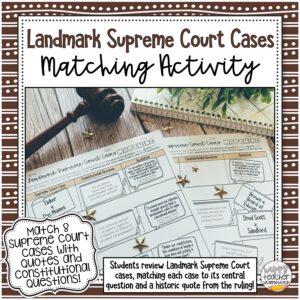
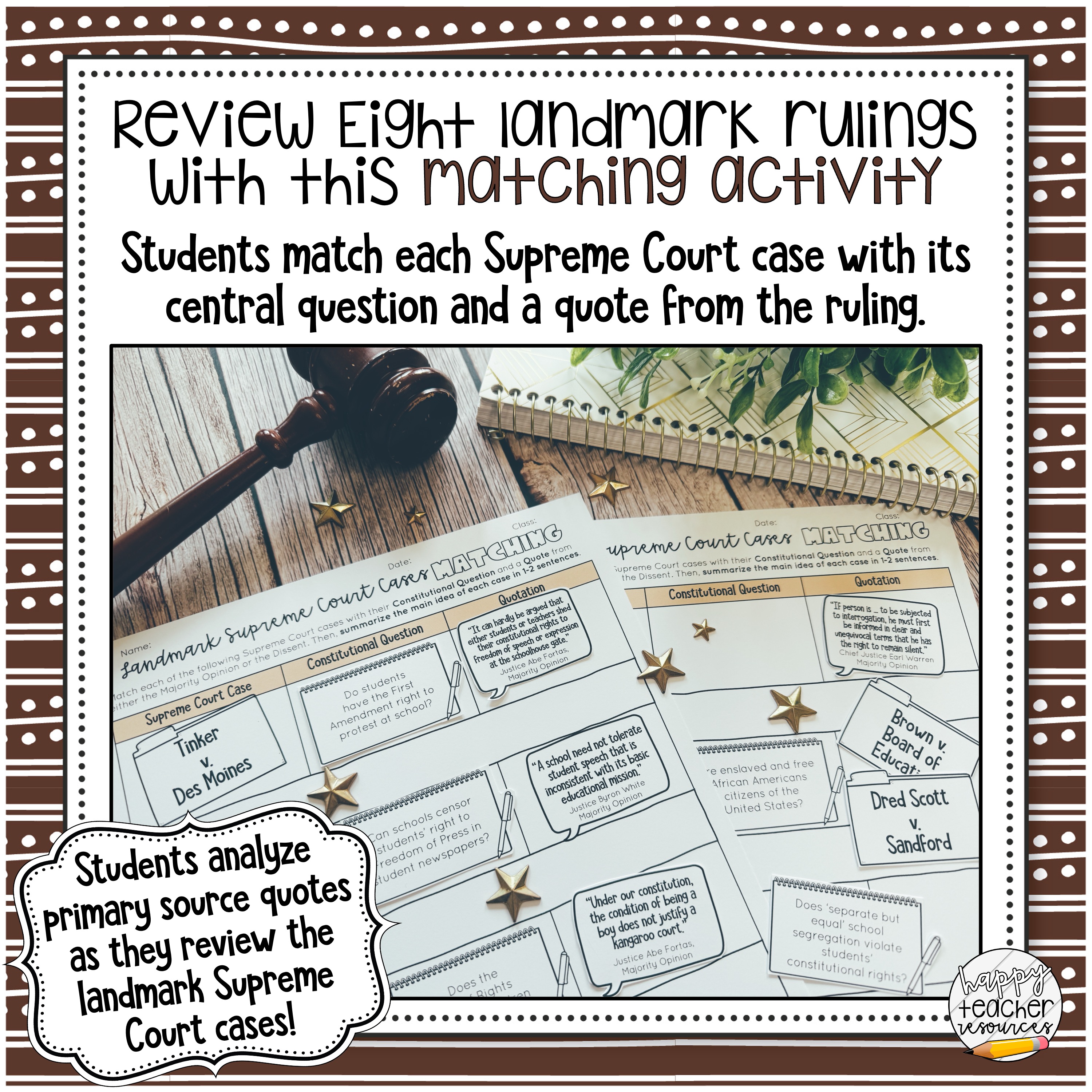
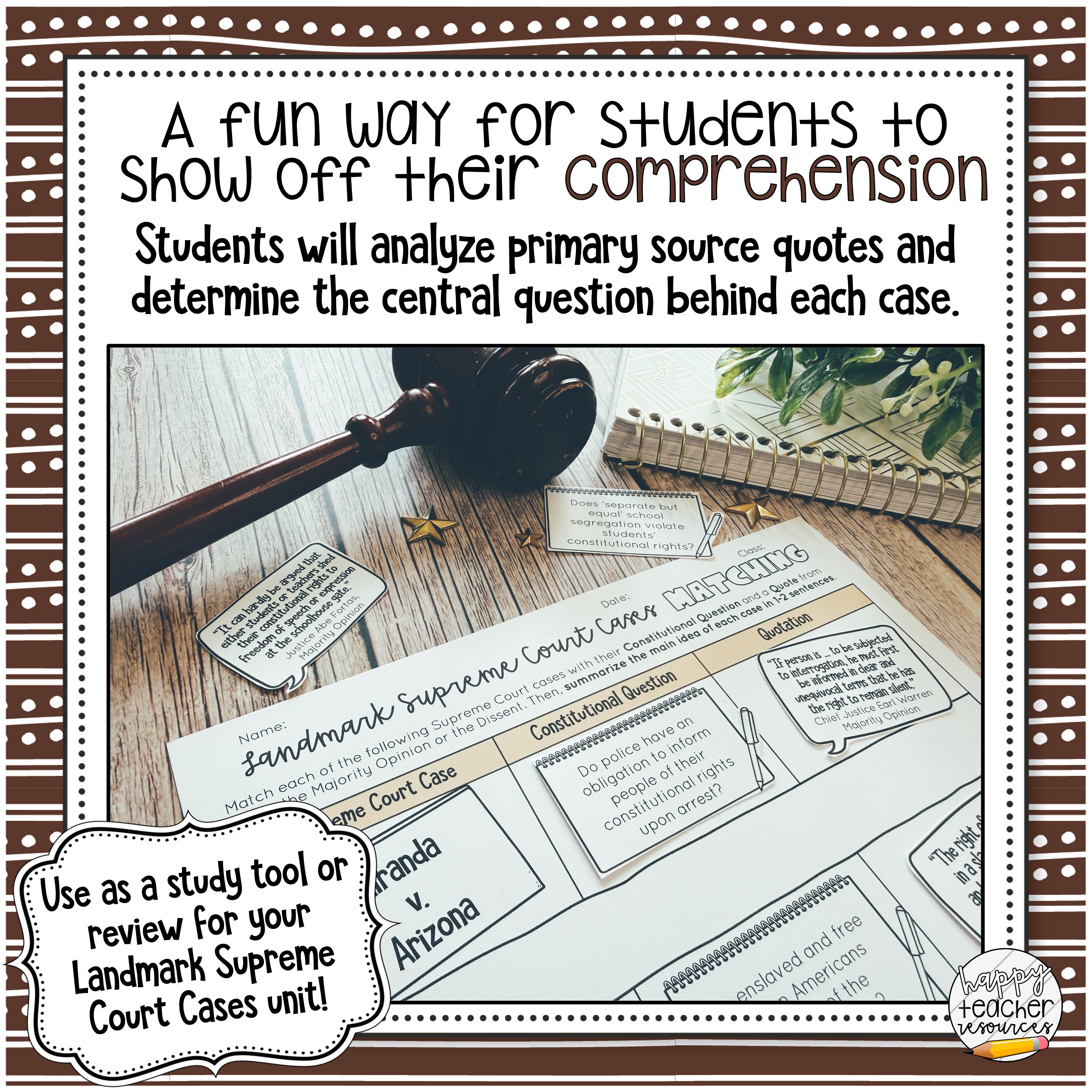
Review the landmark Supreme Court cases with this fun, hands-on matching activity for Civics and American History! Students will review historic United States Supreme Court cases like Brown v. Board of Education, Miranda v. Arizona, Plessy v. Ferguson and more in this cut-and-paste activity, perfect for middle school students studying the Judicial Branch and the United States Supreme Court in Civics, History, or U.S. Government class.
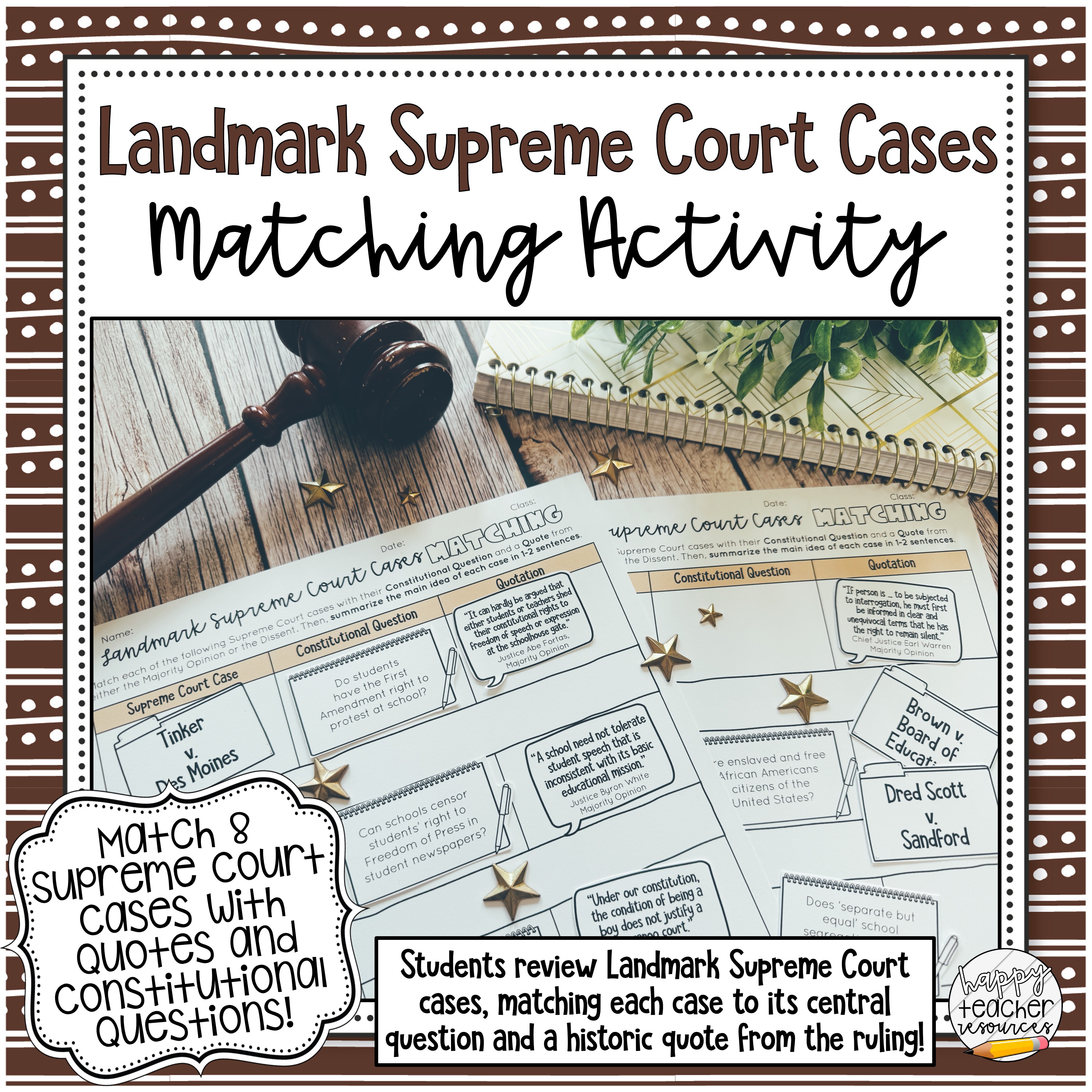
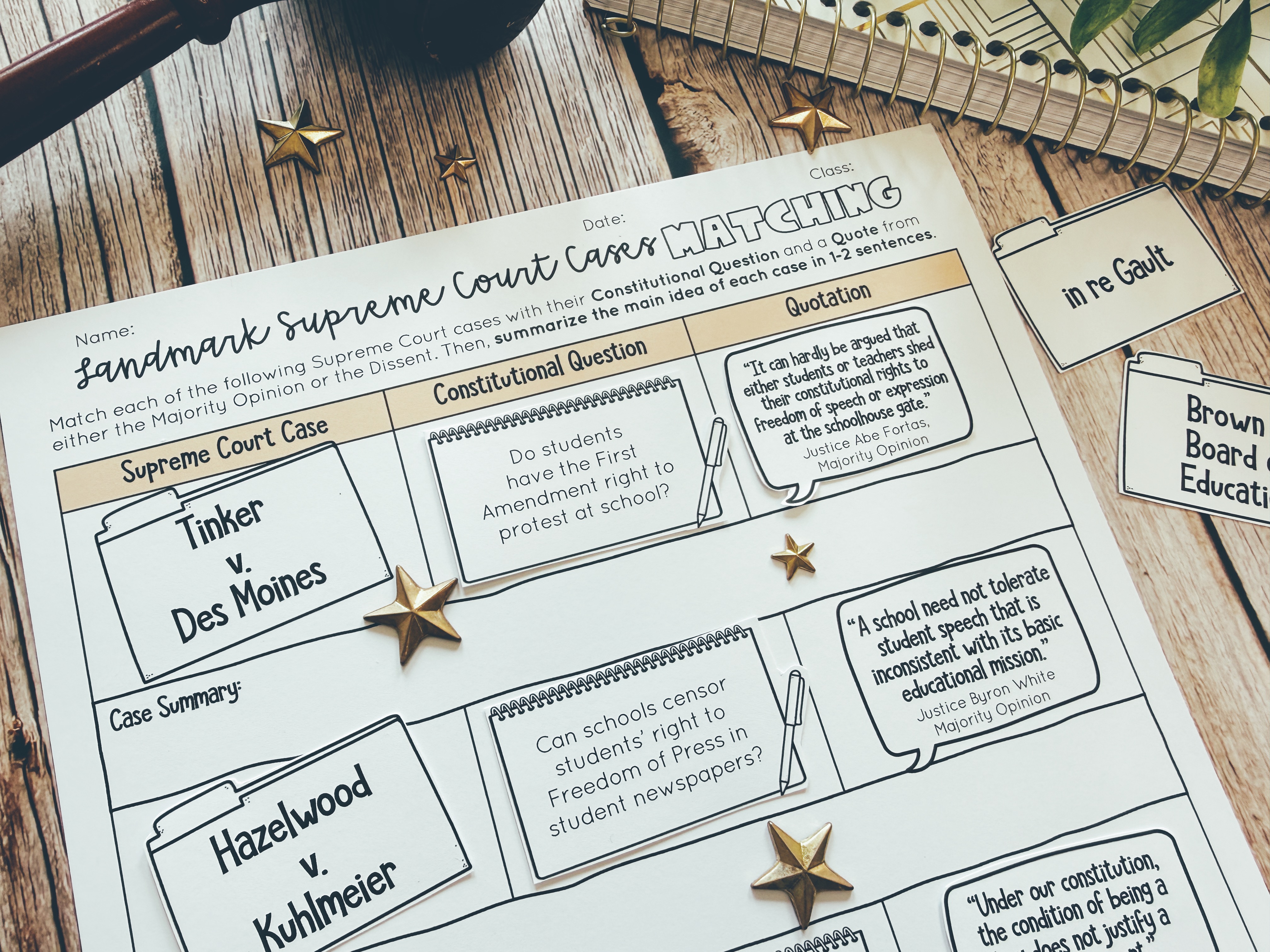
In this Landmark Supreme Court Cases Matching Activity, students pair eight historic Supreme Court decisions with primary source quotes (pulled from the Supreme Court’s Majority or Dissenting Opinions) and the central constitutional question each case asks. Students then demonstrate their understanding by writing a 1-2 sentence summary of each case. This activity is an engaging, hands-on review for your Judicial Branch or Landmark Supreme Court Cases unit.
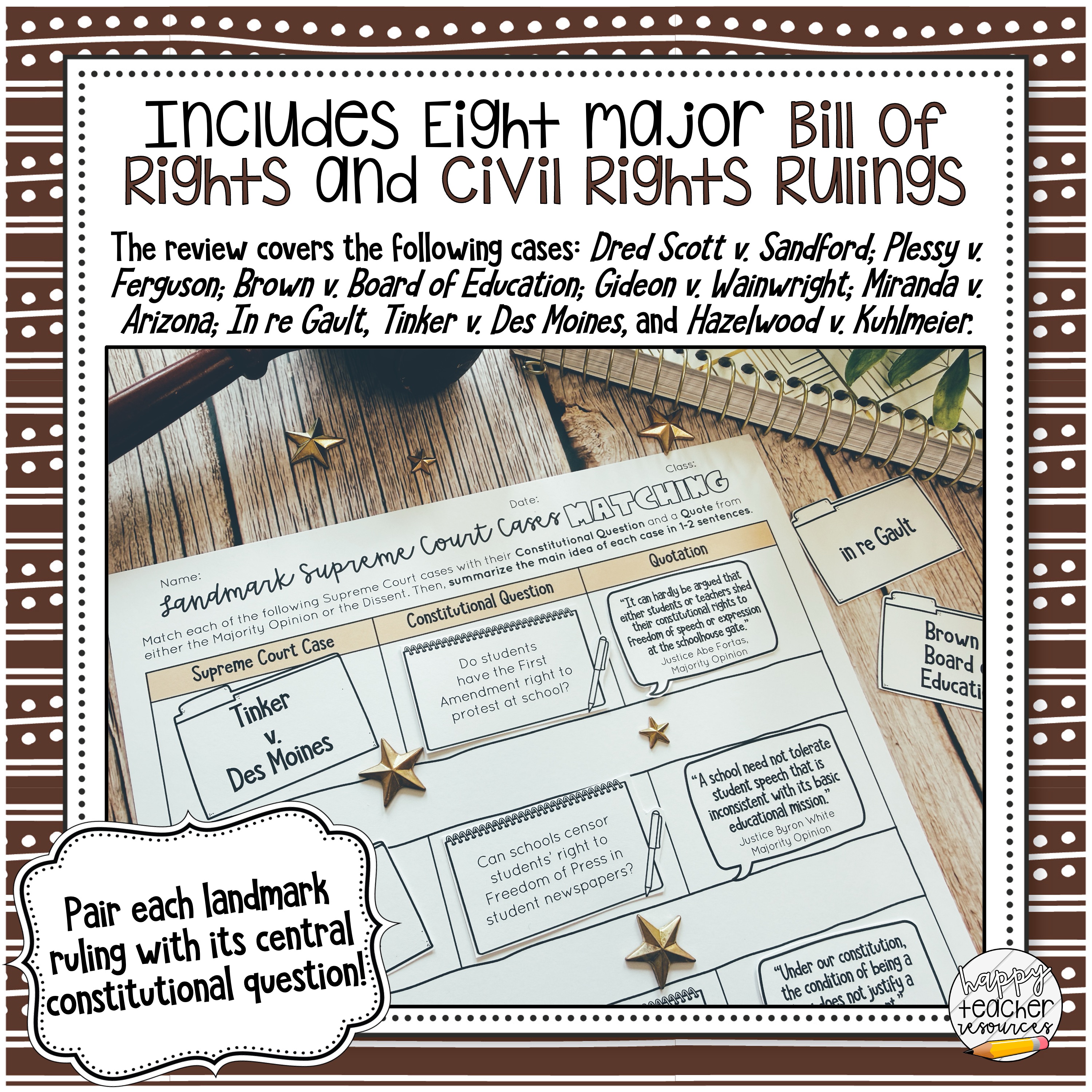
The Supreme Court cases included in this resource:
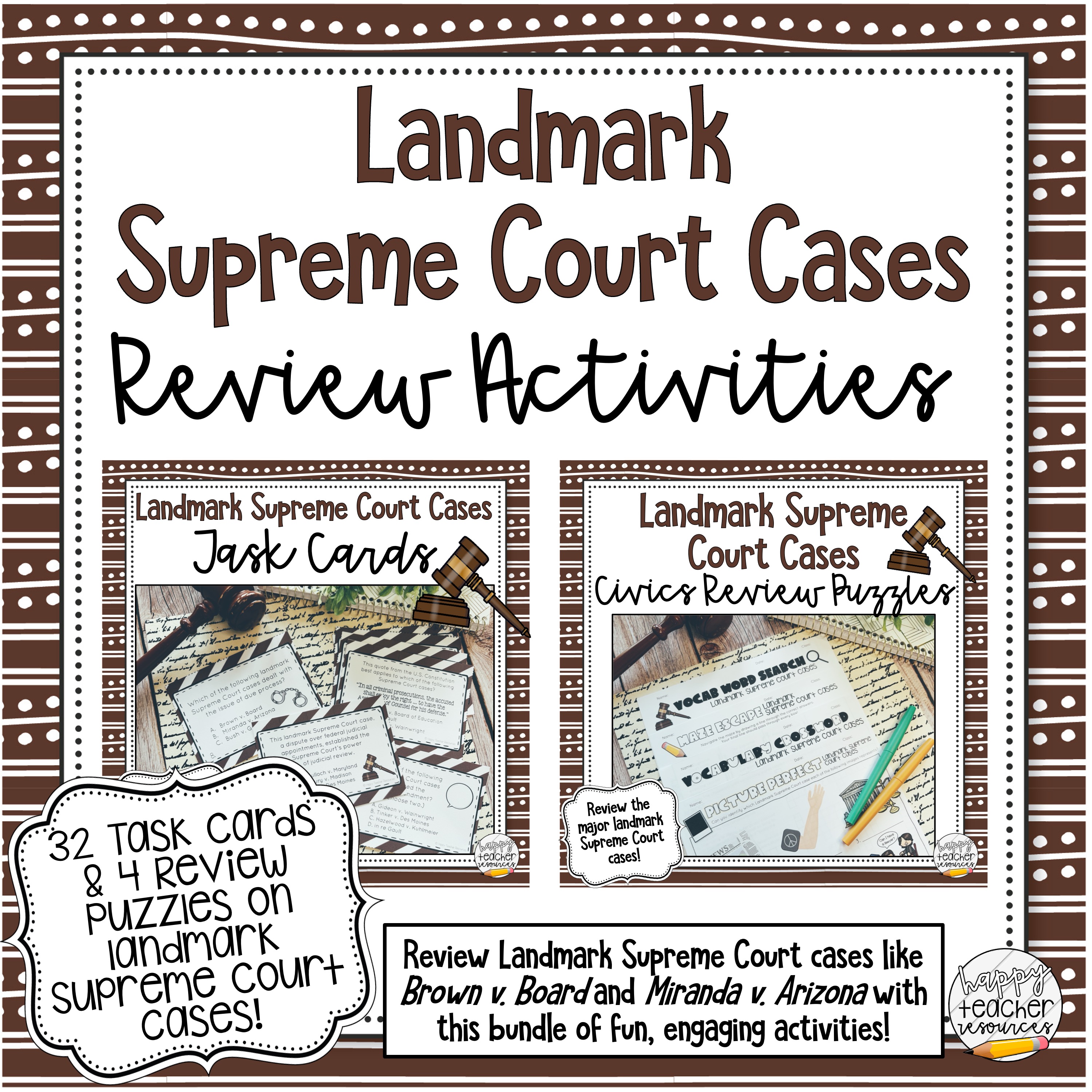
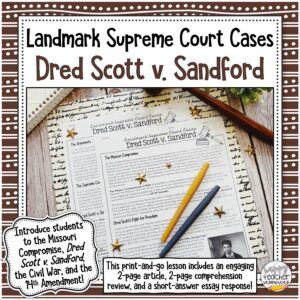
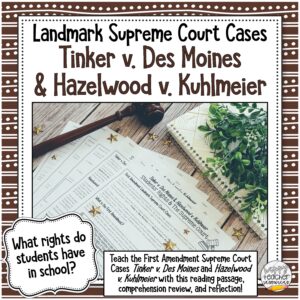
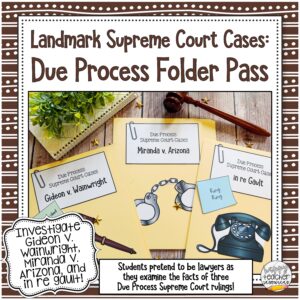
Dred Scott v. Sandford; Plessy v. Ferguson; Brown v. Board of Education; Gideon v. Wainwright; Miranda v. Arizona; In re Gault, Tinker v. Des Moines, and Hazelwood v. Kuhlmeier.
Aligned to the Florida State Standards for Middle School Civics (and easily applicable to other states, as well!):
- SS.7.CG.3.11: Analyze the effects of landmark Supreme Court decisions on law, liberty and the interpretation of the U.S. Constitution.
In this Landmark U.S. Supreme Court Cases Matching Activity, students will:
✯ Consider the central constitutional question behind each of eight landmark United States Supreme Court cases. For each of the eight rulings, students will read a “Constitutional Question” card and match it to a case — what question related to the United States Constitution was each case asking the Supreme Court to answer?
Sample constitutional questions include:
- Do police have an obligation to inform people of their constitutional rights upon arrest? (Miranda v. Arizona)
- Do students have the First Amendment right to protest at school? (Tinker v. Des Moines)
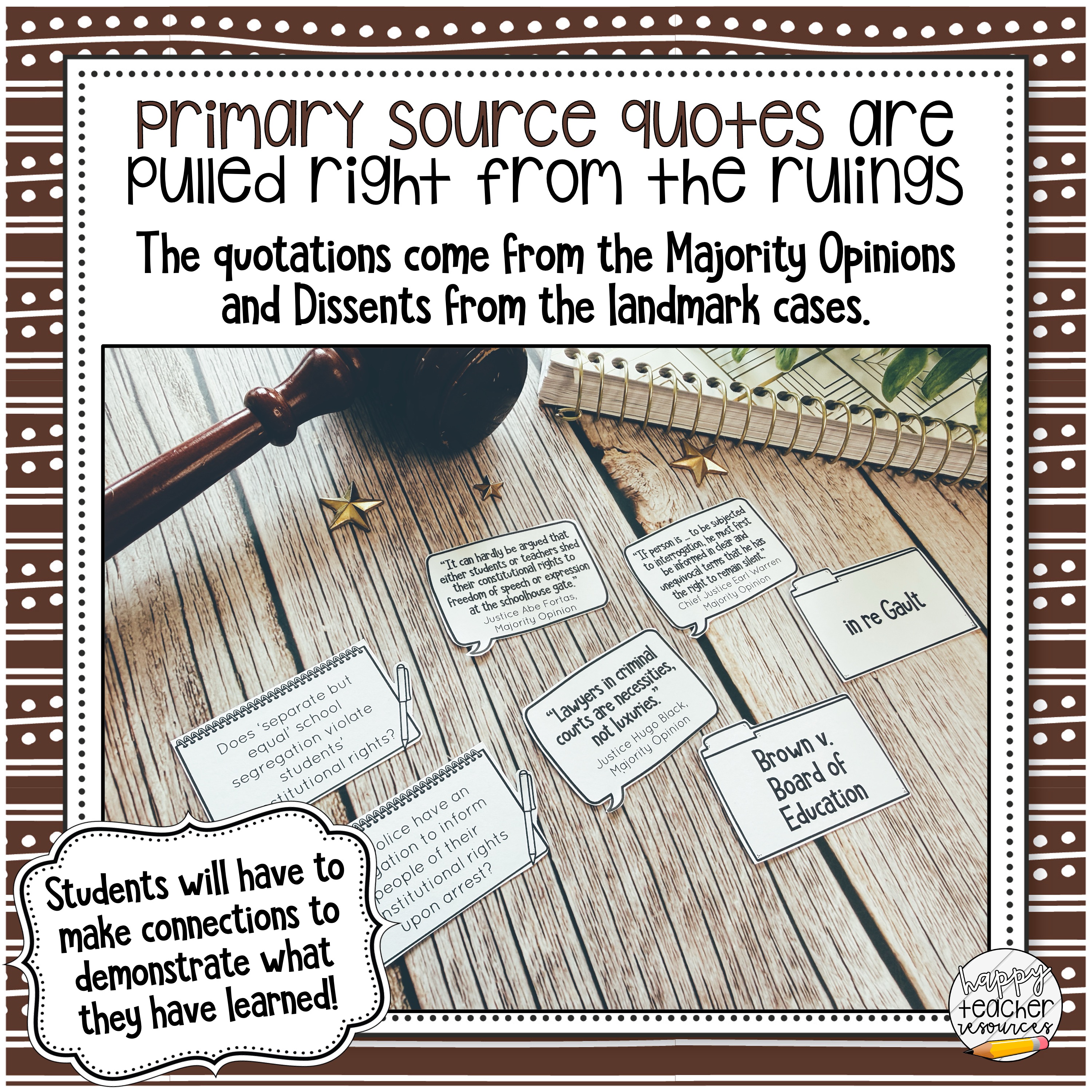
✯ Analyze eight primary source quotes pulled directly from the United States Supreme Court’s ruling — either from the Majority Opinion or from the Dissent! They’ll be able to use context clues to match each quote to the Supreme Court ruling it came from.
Sample primary source quotes include:
- “Lawyers in criminal courts are necessities, not luxuries.” (Gideon v. Wainwright)
- “A school need not tolerate student speech that is inconsistent with its basic educational mission.” (Hazelwood v. Kuhlmeier)
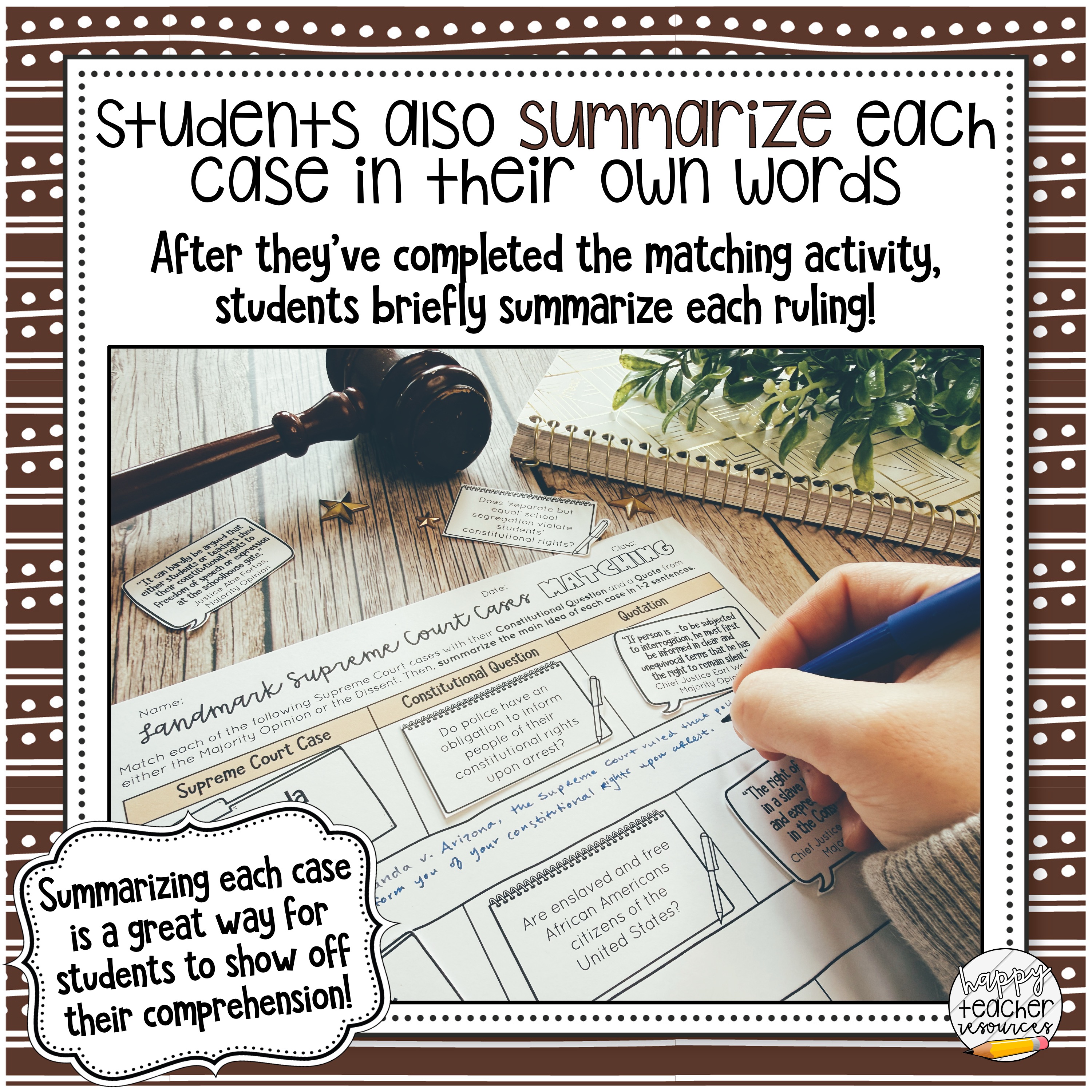
✯ Finally, students will summarize each landmark Supreme Court case in their own words. After they complete the cut-and-paste portion of the activity, students will be asked to briefly summarize each case in 1-2 sentences. This is a great way to show off their comprehension and their ability to succinctly summarize the main idea behind each case!
This resource makes for a great review of your Landmark Supreme Court Cases unit — use it as a study tool to prep for your state’s Civics EOC!
This resource is presented as a printable, non-editable PDF. An Answer Key is included. It consists of a two-page worksheet and one page of cut-out matches.
More Happy Teacher Products You Might Enjoy:
✩ Landmark Supreme Court Cases Due Process Folder Pass | Civics & American History
✩ Landmark Supreme Court Cases: Dred Scott v. Sandford BUNDLE for Civics & History
Become a happy teacher — join the email list!
Never miss a new product or a sale by signing up for an email subscription! I send periodic emails recapping new products, updates, and upcoming sales. Plus, you’ll get a free week of Civics Bell Ringers just for signing up!
Enter your email below to get started.
You can also follow Happy Teacher Resources on social media: Instagram | Facebook | Pinterest